
1. Narrative History Framework
The central framework provides the methodology for researching, structuring, and writing narrative history.
It is the intellectual foundation of the product.
History Co-Author is an AI-assisted research and writing system designed for people who want to turn historical subjects, source material, and research into structured nonfiction books. Rather than functioning like a basic chatbot that simply generates paragraphs from a short prompt, the system is positioned around a research-first workflow that combines source investigation, planning, narrative development, chapter organization, and supporting book material. The framework is designed to work with Claude and ChatGPT, allowing writers to use AI while retaining control over the subject, direction, and creative decisions.
What makes this particularly interesting is its focus on narrative history rather than generic AI content. History Co-Author is designed around the idea that a good nonfiction book needs more than accurate-looking information. It needs evidence, source awareness, structure, characters, chronology, context, and a compelling narrative. The system's creators say the framework was developed specifically to address the common problem of AI-generated history becoming either inaccurate or overly similar to a dry encyclopedia-style summary.
If you're researching history co-author AI, nonfiction publishing tools, AI-assisted historical research, or a structured way to turn research into a book, this review explains what the system offers, how its workflow operates, what is included, who it may suit, its limitations, pricing, and what you should know before purchasing.
Order Now History Co-Author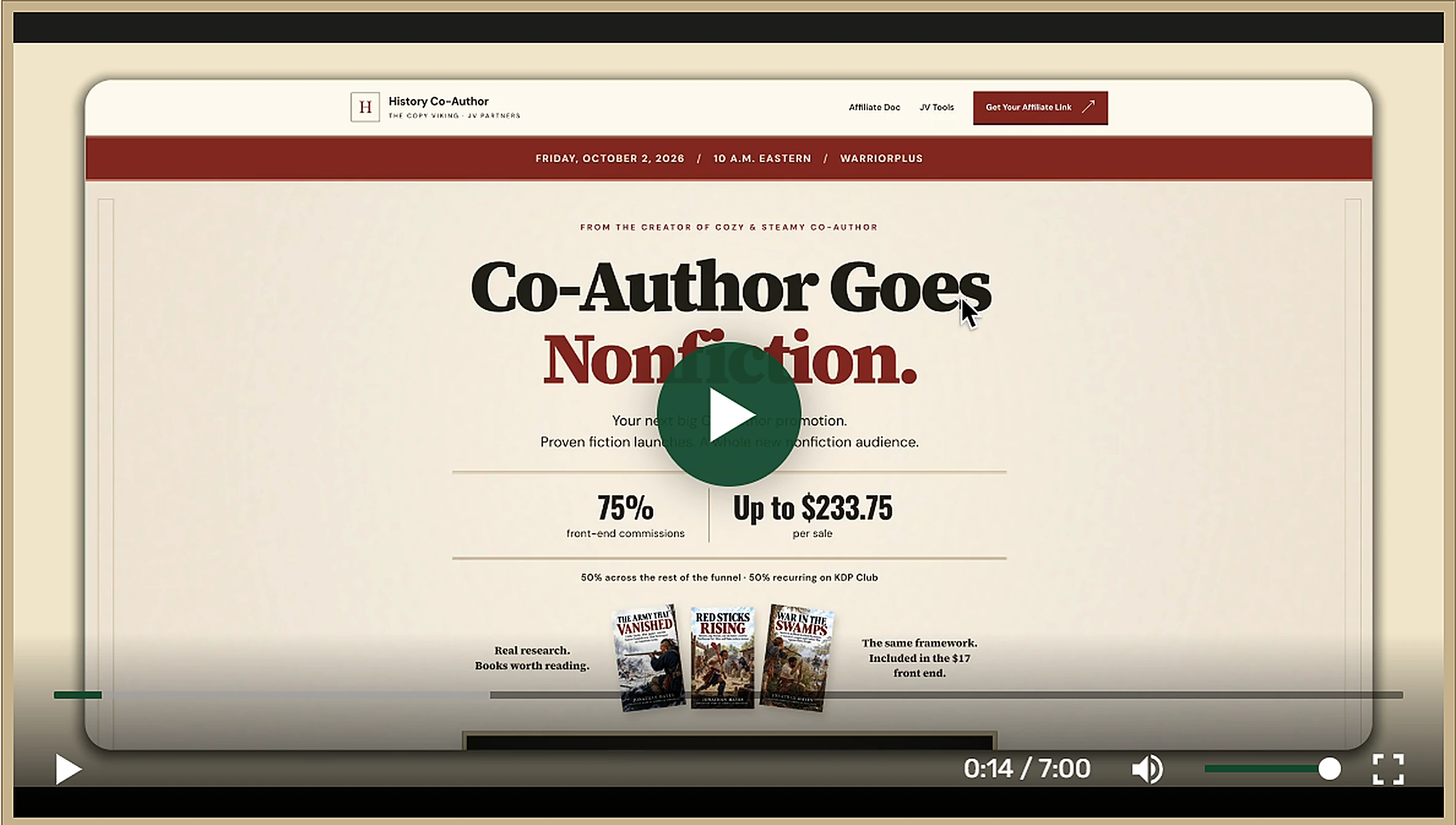
The product is presented as a package rather than merely a standalone chatbot. The launch information identifies three principal components included in the front-end offer:
The central framework provides the methodology for researching, structuring, and writing narrative history.
It is the intellectual foundation of the product.
Training is included to help users understand how to use the framework and accompanying tools. The official partner page specifically describes the front end as including the Narrative History framework, training, and Narrative History Studio.
The Studio is intended to streamline the workflow inside Claude Cowork and ChatGPT Work through dedicated plugins.

"I liked the idea of using AI for research, but I didn't want a generic history article. The structured approach helped me think about my sources and organize the project before moving into the chapters. The biggest difference for me was having a process instead of opening ChatGPT and hoping for the best."

"History Co-Author gave me a much clearer way to approach a nonfiction project. I especially liked the planning documents because they helped me see how the research connected with the chapters. I still review everything carefully, but the workflow made the project feel much more manageable."

"I was interested because I had accumulated years of notes about a historical subject but never turned them into a book. The framework helped me organize the material and start developing a narrative. The AI still needs supervision, but having a dedicated process is much better for me than using random prompts."
History Co-Author is an AI-assisted framework created for nonfiction authors and history enthusiasts who want assistance researching and writing narrative history books. Instead of asking an AI model a single question and immediately requesting a finished book, the system uses a more structured process in which research, planning, writing, continuity, and supporting documentation are treated as connected parts of the project.
The system is designed to work with Claude and ChatGPT. According to the official material, users begin by providing source files and answering a series of questions about the book they want to create. The framework then helps organize research and produces planning documents that can serve as the foundation for the manuscript.
One of the key ideas behind the history co-author software is that AI should not simply be used as a replacement for research. Instead, it can function as a research partner and writing partner while the human author remains responsible for decisions about the subject, angle, interpretation, and final publication.
The official launch material describes the product as combining AI-assisted historical research, source evaluation, narrative development, book organization, and supporting documentation. It also states that users remain responsible for independently checking factual claims and sources before publication.
That last point is important. An AI-assisted system can organize and accelerate a writing process, but historical publishing still requires human judgment and verification.

The history co-author app concept is based on a relatively straightforward workflow: Plan → Research → Write → Review → Publish. The system's official demonstration describes a process involving three files, a series of questions, research organization, chapter development, and final book documentation.
The first step is choosing what you want to investigate.
This could potentially be a military campaign, historical figure, political event, forgotten community, family history project, cultural development, conflict, expedition, invention, social movement, or another nonfiction subject.
The important distinction is that the author begins with the subject and research direction rather than asking an AI to invent a complete historical topic from scratch.
The framework is designed around working with source material.
The official workflow describes dropping three files into a Claude or ChatGPT project and answering 18 questions about the proposed book. The system then works through the sources and develops an organized research record.
This is one reason the product may appeal to writers who already have research material but struggle to transform it into a coherent manuscript.
The history co-author historical research process is intended to examine evidence rather than simply generate generic historical prose.
The supplied launch information says the framework helps users locate sources, evaluate their reliability, compare conflicting accounts, examine eyewitness material and official records, and connect findings to supporting evidence.
This makes research organization one of the central elements of the system.
Once the research foundation exists, the system helps move toward book planning.
The official demonstration identifies planning materials including a Book Bible, Research Bible, People, Places and Entities document, and Chapter Outline.
These documents can help an author understand the overall architecture of a book before generating large amounts of prose.
The writing process is not presented as a single "write my entire book" command.
Instead, the framework is designed around chapter-by-chapter development. The official workflow describes using the research record, framework, and Book State to maintain continuity as the manuscript develops.
That can be particularly useful for long-form nonfiction because continuity becomes increasingly difficult when a project grows from several thousand words into a full-length manuscript.
Once the main manuscript is complete, the system can help prepare supporting material.
The official product pages mention a cast of characters, notes on names, source notes, chapter notes, and a selected bibliography.
For nonfiction authors, these materials can make a manuscript feel considerably more organized and publication-ready.

If you have always wanted to write a history book but have struggled to organize the project, the structured approach may be useful.
The framework can provide a starting point for research, planning, chapter development, and documentation.
Experienced authors may already understand research and publishing but want to experiment with AI-assisted workflows.
For these users, the value may be less about learning how to write and more about improving the speed and organization of their existing process.
People who spend years researching a particular conflict, family, region, military campaign, political period, or historical figure may already possess valuable knowledge.
The challenge is transforming that knowledge into a coherent book.
This is one area where the history co-author book research workflow could be particularly relevant.
The product's positioning is closely connected to self-publishing.
The official workflow specifically describes publishing through KDP and preparing books for Kindle, paperback, and hardcover formats.
However, users should remember that publishing a book does not guarantee sales or royalties.
Some authors do not want AI to write everything.
They simply want help with research, organization, outlining, continuity, and first drafts.
The "Done With You" approach appears especially suited to this group because the author remains involved in shaping the manuscript.
Not everyone needs a specialized framework.
If you only want to write a short blog post about a historical event, a conventional research and writing workflow may be enough.
Likewise, if you are an academic historian with an established research methodology, citation system, archival process, and writing workflow, you may not need every component.
The strongest use case is likely someone who wants to produce long-form narrative history but needs a structured system to connect research, planning, AI-assisted writing, and publishing.
One of the biggest reasons someone might investigate history co-author AI is the research problem.
Historical subjects can contain contradictory accounts, incomplete records, secondary interpretations, outdated assumptions, and sources of varying reliability.
The framework is designed to help writers investigate these materials systematically rather than treating every piece of information as equally reliable. According to the supplied material, it encourages examination of who produced a source, how close that source was to the events, and what might influence its account.
For someone beginning a nonfiction project, that structure can be more useful than simply having access to a general-purpose chatbot.

A major component of the research process is source evaluation.
The system is positioned around asking questions about evidence and comparing accounts rather than blindly accepting the first answer generated by AI.
That approach is especially relevant to historical nonfiction, where a compelling sentence is not necessarily a well-supported sentence.

The history co-author writing framework is designed to connect research with storytelling.
Generic AI writing can often produce grammatically correct paragraphs that sound informative but lack narrative momentum.
The framework attempts to address this by treating narrative structure as part of the writing process.
The official pages describe narrative history as true historical events presented with the storytelling qualities associated with compelling nonfiction.
The objective is not to turn history into fiction. Instead, the goal is to make documented events easier and more interesting to follow while maintaining a connection to evidence.

One of the more distinctive elements is Narrative History Studio.
The launch information states that Narrative History Studio brings the workflow into Claude Cowork and ChatGPT Work through dedicated plugins. The stated purpose is to automate portions of workflow management so authors can spend more time making research and creative decisions rather than manually managing every moving part.
This is worth separating from the underlying framework.
The framework provides the methodology.
The Studio is positioned as the workflow environment that helps put that methodology into practice.

Long nonfiction projects often fail before the writing itself begins.
An author may have dozens of research documents but no clear chapter structure. Another may have a good outline but no reliable evidence trail.
The history co-author book writing workflow attempts to address this by creating planning documents before the manuscript is fully written.
The official demonstration identifies several planning resources, including a Book Bible, Research Bible, People, Places and Entities document, and Chapter Outline.
This can provide a useful bridge between research and actual writing.

Instead of treating the manuscript as one enormous generation request, History Co-Author is designed around sequential chapter development.
This matters because long-form books need consistency.
Characters need to remain recognizable. Dates need to remain consistent. Events need to occur in the correct sequence. Earlier information needs to remain compatible with later chapters.
A structured history co-author writing software workflow can make these issues easier to manage than starting every chapter from an empty chatbot window.
The official workflow references a "Book State" that helps maintain continuity as chapters are developed.
For a short article, continuity may not be a major concern.
For a 50,000-word or 100,000-word history book, it becomes much more important.
A continuity-oriented approach can help the author keep track of the evolving manuscript instead of relying entirely on the AI model's ability to remember every detail.
Another notable feature is the ability to produce supporting materials around the manuscript.
The official pages specifically mention:
These materials are described as being built from the research and manuscript.
This makes the history co-author authoring tool more than a simple paragraph generator.
The first practical benefit of the history co-author research tool approach is organization.
Instead of having research scattered across browser tabs, notes, documents, and AI conversations, the framework is intended to maintain a connected research record.
That can make it easier to return to evidence when writing later chapters.
Research and storytelling are different skills.
Someone may spend weeks finding fascinating historical material and still struggle to turn it into a readable chapter.
The framework is specifically positioned around bridging those two activities.
This is where the narrative component becomes important.
Rather than simply listing what happened, the system is designed to help organize events around people, decisions, consequences, conflicts, and chronology.
The product is particularly relevant to people interested in history co-author nonfiction writing.
Potential users could include:
The system does not remove the need for human judgment, but it can potentially reduce the amount of repetitive organizational work.
Starting a history book can be intimidating.
You may know your subject extremely well but still wonder:
A structured framework can provide an answer to these questions before the manuscript becomes overwhelming.
The official page describes three possible paths: Done For You, Done With You, and Get More Done.
This approach is for users who want the AI to perform much of the research and writing work while they make the major decisions.
This approach is more collaborative. The system produces a first draft, while the author reviews, edits, reshapes, and personalizes it.
Some users may simply want the framework and planning documents to improve their own writing process.
This flexibility is useful because not every author wants the same level of AI involvement.
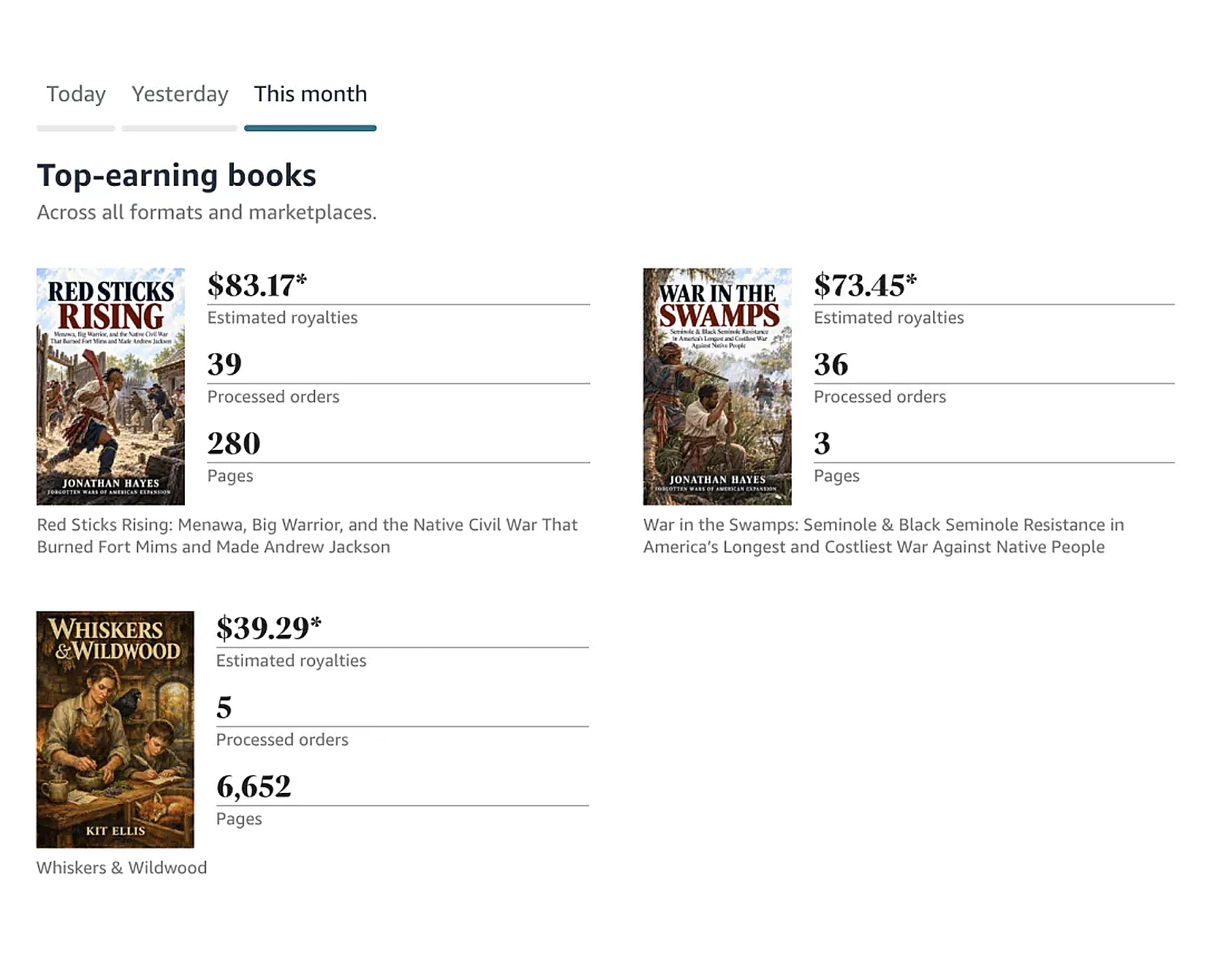
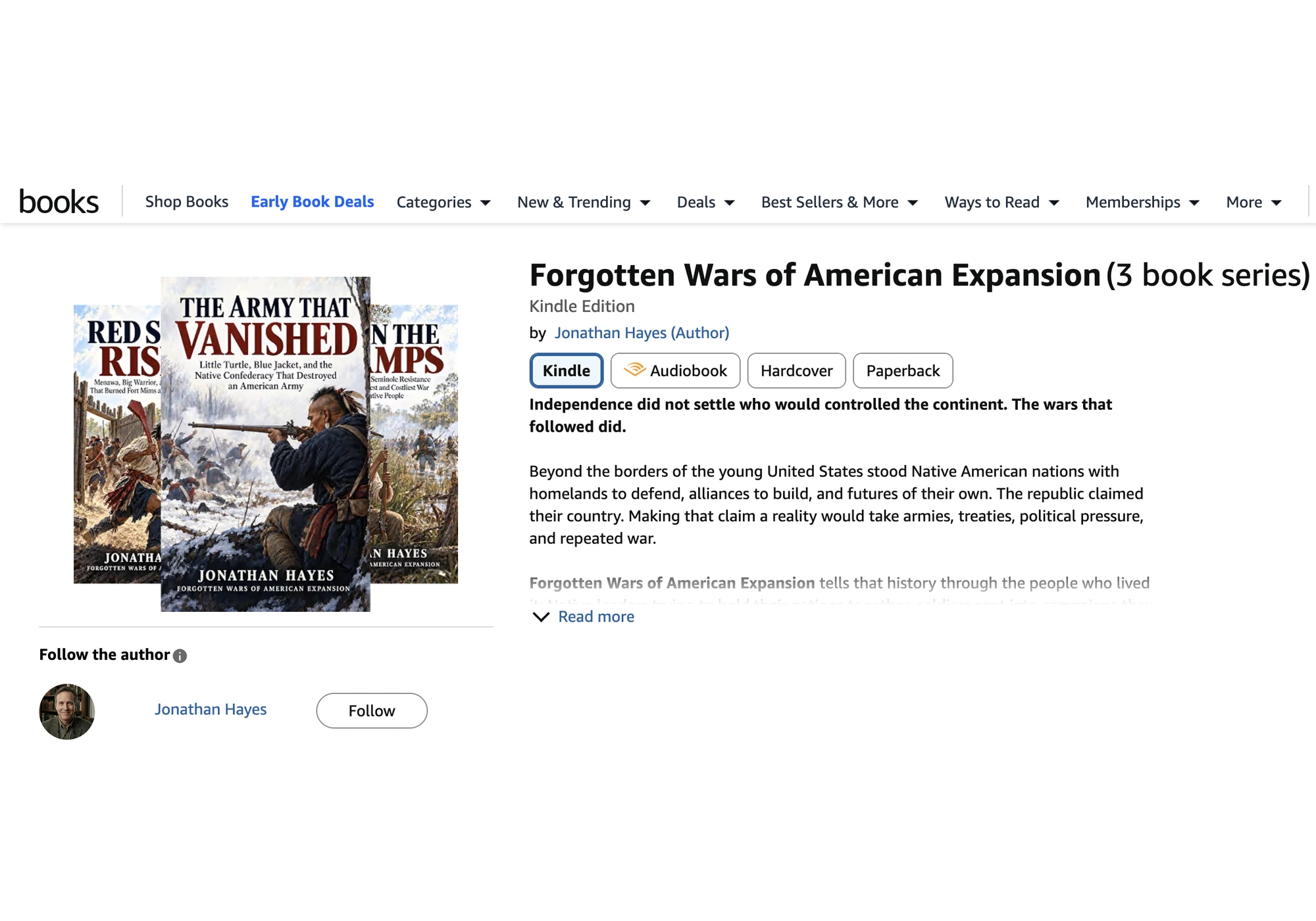
The official case study emphasizes the use of history books as a series.
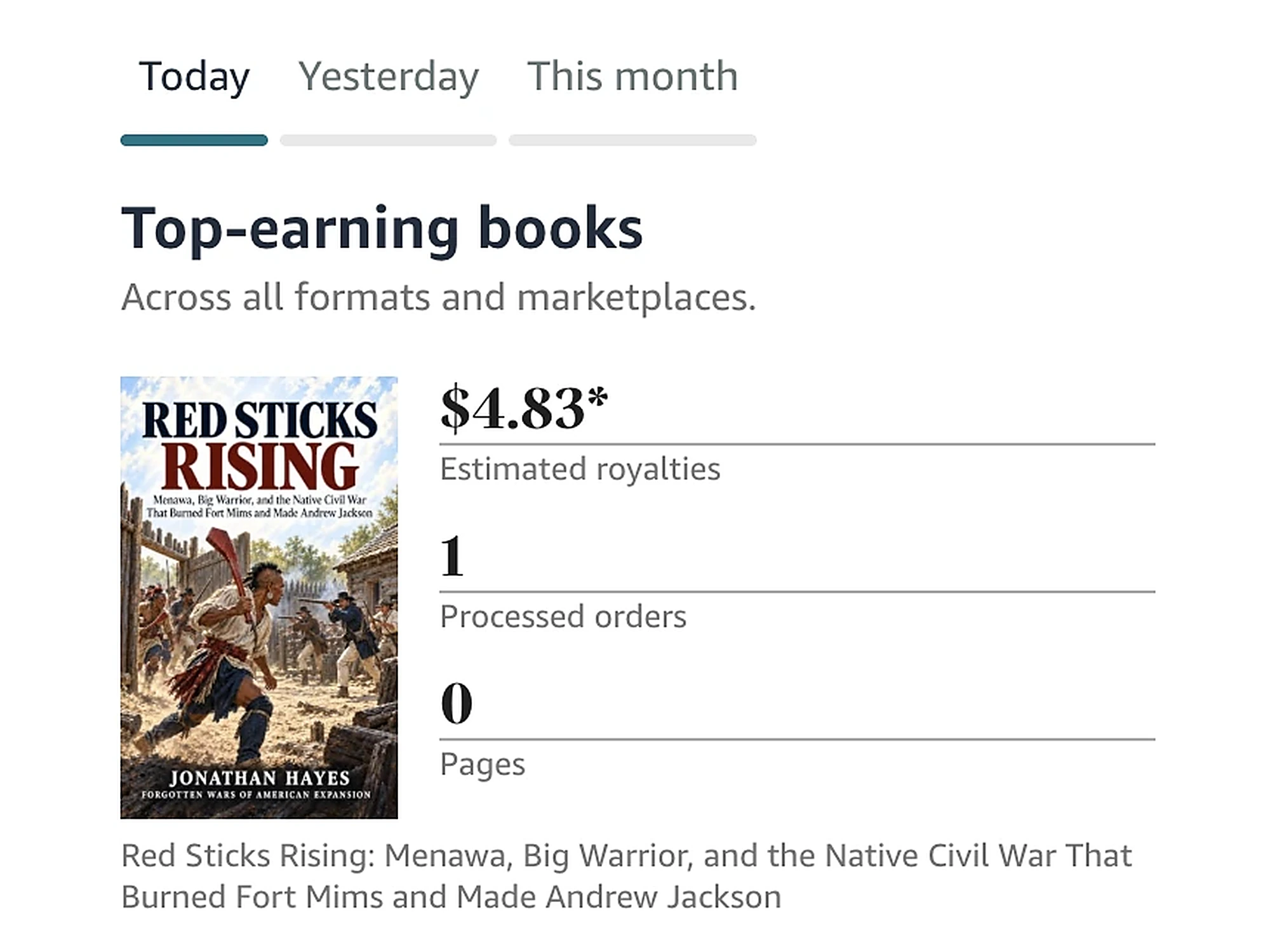
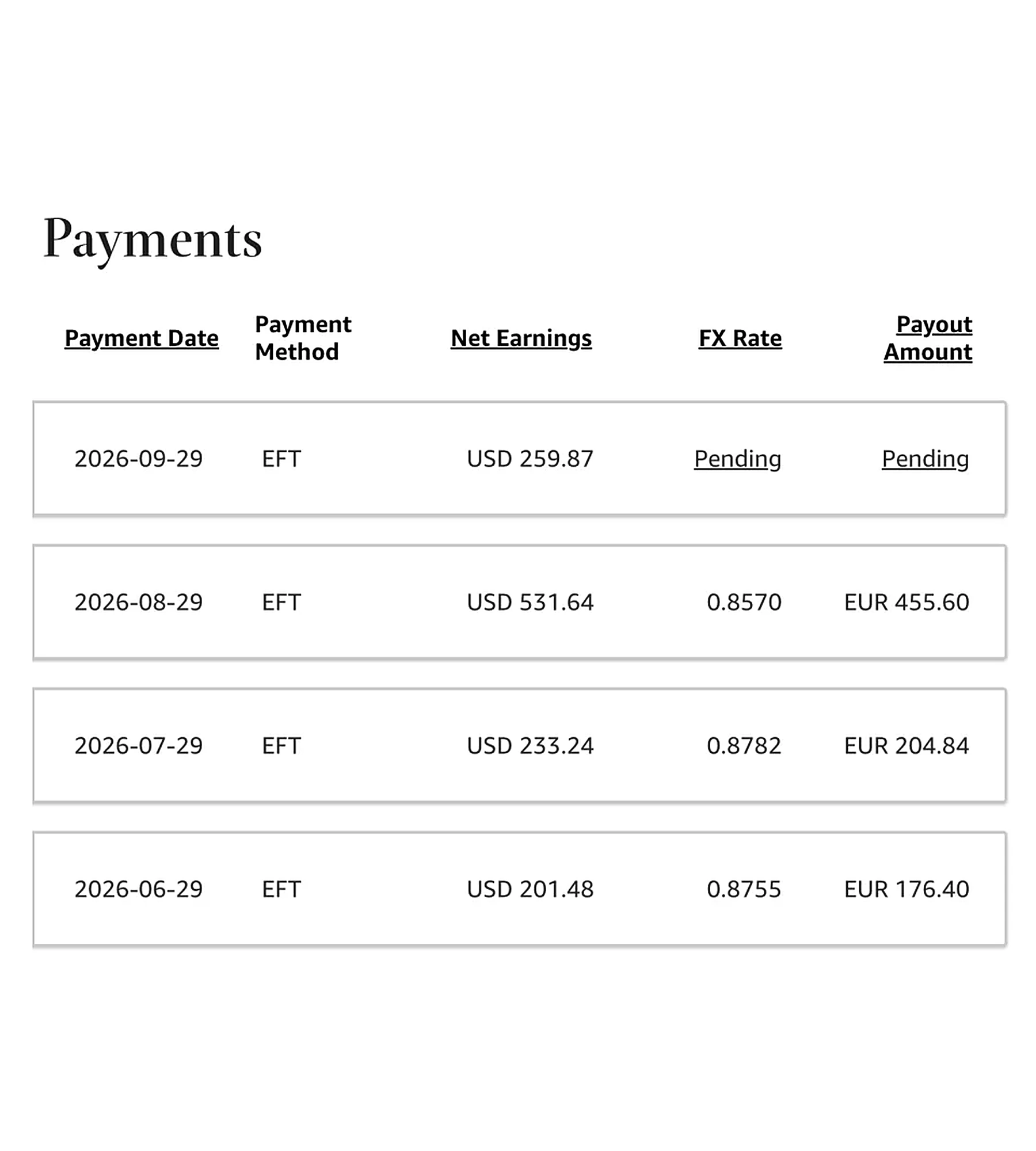
The creator describes producing three books in the Forgotten Wars of American Expansion series using the framework and publishing them under the pen name Jonathan Hayes. The product page states that the three books totaled 857 pages and more than 250,000 words and were produced in under fourteen days.
Those are the creator's reported results, not a guarantee for every user.
Still, they illustrate the broader concept: a structured workflow can potentially make it easier to move from one book project to another.
Historical nonfiction has a unique challenge.
A reader can forgive an imperfect sentence.
They are much less likely to forgive a historical claim that cannot be supported.
The official product positioning repeatedly emphasizes source evaluation and evidence. It describes examining eyewitness accounts, official records, competing interpretations, and quotations.
That is an important distinction between research-oriented AI writing and generic content generation.
However, users should not interpret this as a guarantee that every AI-generated fact is automatically correct.
The supplied launch announcement explicitly states that authors remain responsible for independently checking sources and factual claims before publication.
That should be treated as a fundamental part of the workflow.
Those are the creator's reported results, not a guarantee for every user.
Narrative history occupies an interesting space between traditional academic history and commercial nonfiction.
It still deals with real people and real events.
But it attempts to make the experience of reading those events more immersive.
The official material describes narrative history as true history told with the engagement and momentum commonly associated with novels, while retaining the factual basis of nonfiction.
For example, instead of beginning with a broad statement such as:
"The campaign began in the autumn of 1790."
A narrative approach may begin with the people, conditions, decisions, and evidence surrounding that moment.
The objective is not to invent dialogue or fabricate scenes.
It is to make documented history readable.
That distinction is one of the most important aspects to understand when evaluating the history co-author narrative history approach.
A normal AI workflow might begin with a simple instruction such as “Write a 3,000-word article about the American Revolution.” While a general-purpose AI tool may produce readable content from that prompt, writing a serious nonfiction book requires a much more structured process.
A historical book needs reliable sources, consistent chronology, carefully tracked people and places, supporting evidence, organized chapters, narrative flow, and extensive editorial review. This is where history co-author AI writing takes a different approach. Instead of treating every prompt as an isolated request, the framework is designed to connect research, planning, writing, and review into one organized workflow.
Before writing a historical book, the author needs to identify useful and relevant sources. These may include books, archival documents, historical records, interviews, government documents, newspaper reports, academic research, eyewitness accounts, and other primary or secondary sources.
A structured approach to source identification can help the writer understand where important information originated and which materials deserve closer examination. Rather than immediately turning a search result into a finished paragraph, the research process gives the author an opportunity to investigate the underlying evidence.
Historical events are not always described in exactly the same way by every source. Different historians may interpret the same event differently, while eyewitnesses can provide perspectives that differ from official records.
Source comparison allows the writer to examine these differences rather than automatically accepting one version of an event. This can help identify disagreements, strengthen the research record, and give the eventual book a more balanced foundation.
Chronology is particularly important when writing about complex historical events.
A book may involve multiple people, locations, battles, political decisions, organizations, and related events occurring over months or years. If those events are presented in the wrong sequence, even an otherwise well-written chapter can become confusing.
A structured workflow helps the writer maintain a clear timeline so that earlier events, later developments, and cause-and-effect relationships remain easier to follow.
Historical nonfiction often revolves around real people. Their names, positions, relationships, actions, locations, and decisions may appear across multiple chapters.
Character tracking helps maintain consistency when the same individuals return throughout the manuscript. It can also help the author distinguish between people with similar names and keep important biographical information organized.
For a long-form book, this becomes increasingly valuable because remembering every detail about dozens of historical figures can become difficult when working manually.
Historical writing should be connected to evidence.
An evidence record can help the author keep track of where a particular fact, quotation, date, event, or interpretation originated. This becomes particularly useful during the editing stage, when the writer needs to return to a source and confirm whether a statement is properly supported.
Maintaining this connection between claims and evidence can also make the final manuscript easier to fact-check before publication.
A collection of research notes does not automatically become a book.
The author needs to decide what belongs in each chapter, what should be introduced earlier, what information needs additional context, and how individual chapters contribute to the overall story.
A structured chapter plan can help transform a large amount of research into a logical progression. Instead of repeatedly asking AI to “write the next chapter,” the writer can work from an established structure that defines the purpose and direction of each section.
Historical accuracy is important, but readability matters too.
A book that presents every event with equal emphasis can become difficult to read. Some moments require detailed explanation, while others may only need a short transition.
Narrative pacing helps determine where to slow down, where to provide additional context, and where to move the story forward. The goal is to make documented history engaging without turning factual events into fictional scenes.
Continuity becomes increasingly important as a nonfiction manuscript grows.
A person's name should remain consistent. Dates should not suddenly change. Events mentioned in an earlier chapter should remain compatible with later chapters. Locations, relationships, terminology, and historical circumstances also need to remain coherent.
A structured AI workflow can help the author maintain these connections across multiple chapters rather than treating every chapter as a completely separate writing assignment.
Long-form historical writing often requires supporting notes and references.
These materials give the author a way to document where important information came from and provide readers with additional context about the research behind the book.
Organizing notes during the writing process can be more efficient than attempting to reconstruct the entire evidence trail after the manuscript has already been completed.
A bibliography provides a broader record of the books, documents, articles, archives, and other sources consulted during the research process.
For a serious nonfiction project, maintaining the bibliography alongside the research can make the final publishing process easier. It also gives readers a clearer understanding of the materials that informed the book.
However, AI-generated bibliographic information should always be checked against the original sources before publication.
People searching for history co-author app or history co-author software should understand the terminology carefully.
The product is an AI-assisted framework and workflow system designed to operate with Claude and ChatGPT. Narrative History Studio adds dedicated plugins for Claude Cowork and ChatGPT Work.
Therefore, it is more accurate to think of History Co-Author as a structured AI writing and research system rather than a traditional standalone word processor.
You still use the supported AI environment as part of the workflow.
The value comes from the framework, instructions, research process, planning structure, and supporting tools.
According to the supplied official partner information, History Co-Author launched on October 2, 2026, at 10 a.m. Eastern, with an introductory launch price of $17. The partner page states that the launch price is scheduled to increase to $27 on October 7, 2026 at 23:59 EST, after which the product remains available as an evergreen offer.
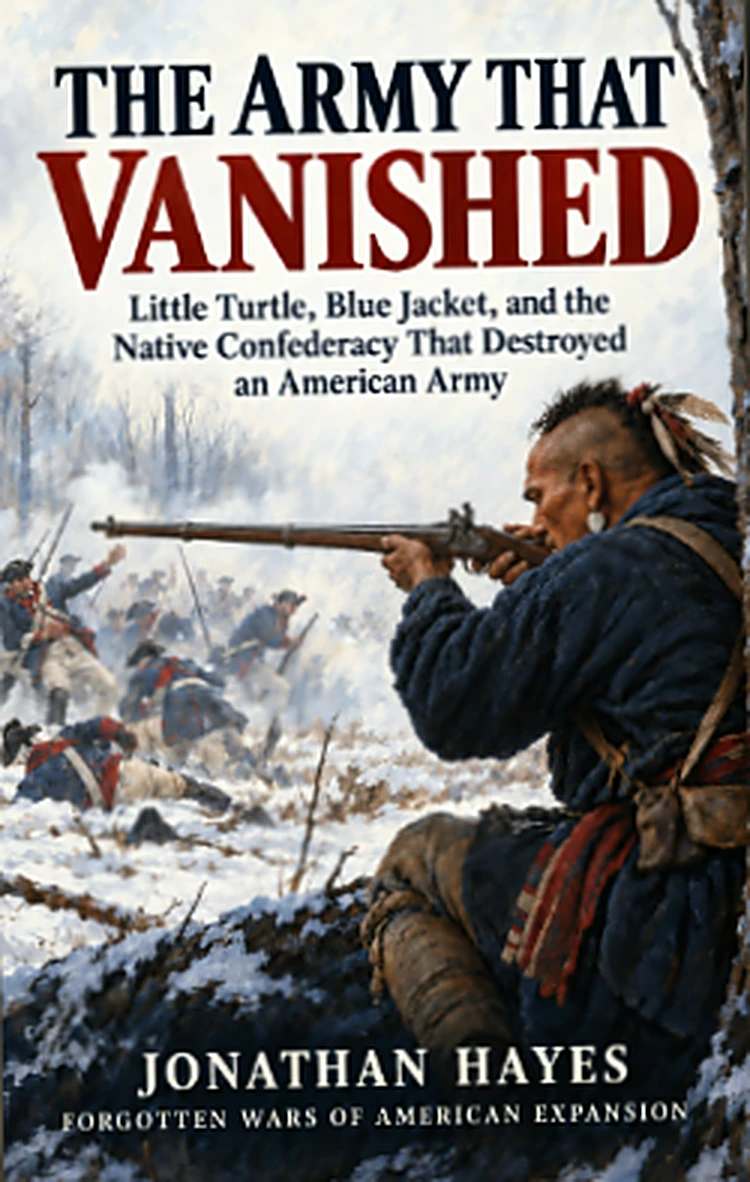 Book One
Little Turtle, Blue Jacket, and the Native Confederacy That Destroyed an American Army
Jonathan Hayes, Forgotten Wars of American Expansion
Read the Free Sample View on Amazon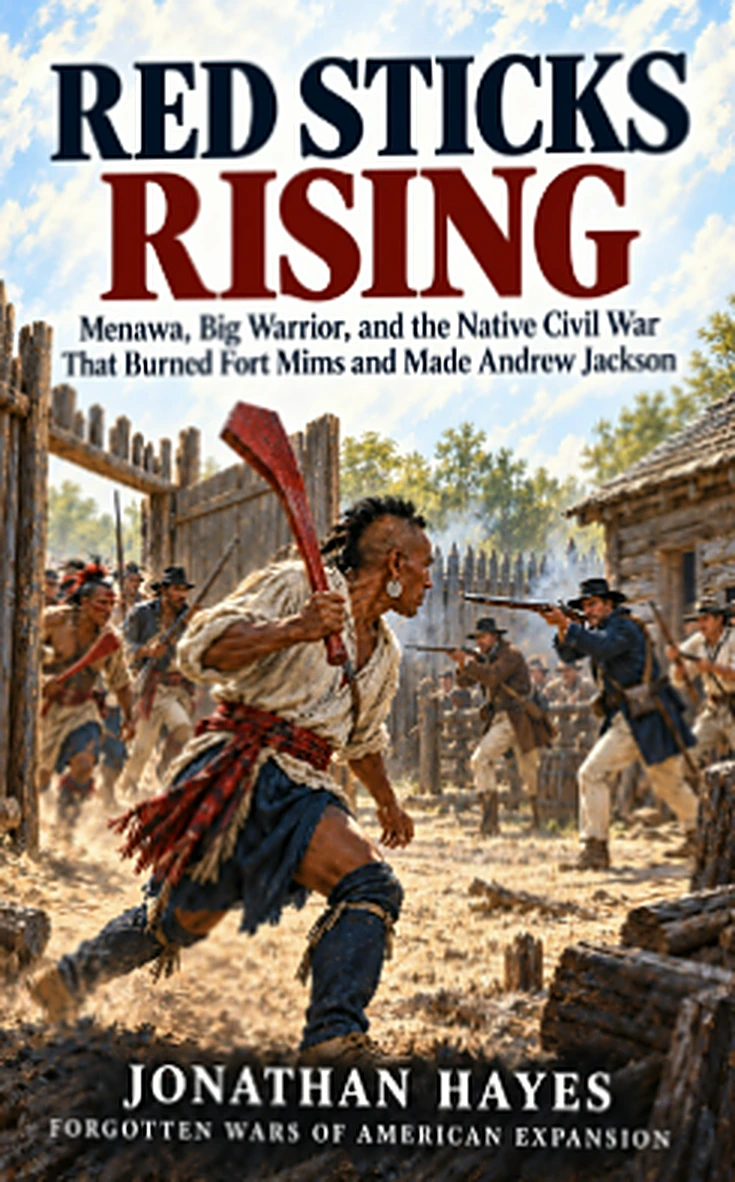 Book Two
Menawa, Big Warrior, and the Native Civil War That Burned Fort Mims and Made Andrew Jackson
Jonathan Hayes, Forgotten Wars of American Expansion
Read the Free Sample View on Amazon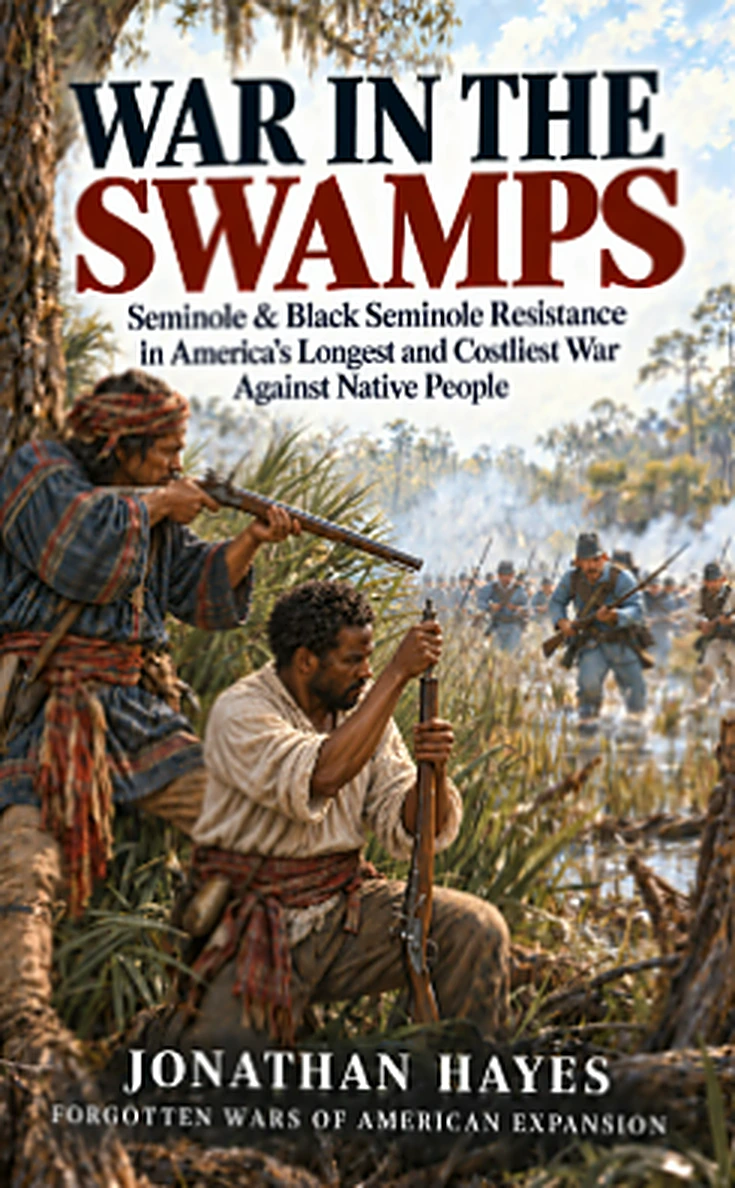 Book Three
Seminole & Black Seminole Resistance in America’s Longest and Costliest War Against Native People
Jonathan Hayes, Forgotten Wars of American Expansion
Read the Free Sample View on AmazonThe low entry price is one of the more notable aspects of the launch.
However, buyers should distinguish between the front-end purchase and optional products later in the funnel.
The front-end package includes the Narrative History framework, training, and Narrative History Studio. The partner page also lists additional optional products in the wider funnel.
The History Editor is listed at $47 and is positioned around editing a manuscript using an associated framework and training.
The History Cover Creator is listed at $67, with an A+ Author Toolkit bundle option at $97.
Promo Stacker is listed at $57 and focuses on book promotion training and case studies involving newsletter sites, list building, and related promotional methods.
The KDP Club is listed as a community with weekly group sessions. The partner page lists a $1 trial for the monthly plan followed by $14.99 per month, or $147 annually.
These are optional funnel products rather than requirements for using the main History Co-Author system.
History Co-Author is designed to assist with researching, planning, writing, and preparing historical nonfiction books using AI-assisted workflows.
It can assist substantially with research, planning, drafting, and chapter development, but users remain involved in the workflow. The official material presents Done For You, Done With You, and Get More Done approaches.
Yes. The supplied product information specifically says the framework works with Claude and ChatGPT.
Yes. Claude is one of the primary AI environments referenced throughout the product's official workflow.
Narrative History Studio is an included component designed to bring the workflow into Claude Cowork and ChatGPT Work through dedicated plugins.
The official product positioning describes it as beginner-friendly. However, beginners should still expect to learn the underlying AI workflow and understand the importance of checking historical sources.
The framework is designed to work with user-provided files and research material. The official workflow begins with putting files into the AI project and developing the research record around them.
Source comparison is one of the areas specifically described in the product material. The framework is intended to examine competing accounts and consider factors affecting source reliability.
The official positioning specifically discusses tracing quotations back to evidence. Nevertheless, users should independently verify quotations before publication.
The framework can help create supporting materials such as chapter notes and a selected bibliography based on the research process.
The framework may be useful for family-history projects where the writer has documents, records, interviews, and other source material. However, users should be particularly careful when interpreting incomplete family records or conflicting accounts.
Not in the conventional sense. It is a framework and workflow system intended to work with AI platforms including Claude and ChatGPT.
The official workflow discusses preparing books for KDP and publishing in Kindle, paperback, and hardcover formats.
No. The case studies presented on the sales page are examples of the creator's results and should not be interpreted as guaranteed outcomes for purchasers.
No AI tool should be treated as a substitute for independent verification. The supplied launch announcement explicitly places responsibility for checking sources and factual claims on the author.
The supplied official partner page lists a $17 launch price for the front-end History Co-Author package.
According to the supplied partner page, the launch price is scheduled to rise to $27 on October 7, 2026 at 23:59 EST.
The partner page lists the Narrative History framework, training, and Narrative History Studio as part of the front-end offer.
No. The product is positioned for aspiring authors and history enthusiasts as well as nonfiction writers. However, serious historical publishing still requires careful research and verification.
The answer depends on what you want from an AI-assisted writing system. If your goal is to create long-form historical nonfiction and you want a structured process covering research, planning, narrative development, and supporting documentation, the framework offers a focused approach. If you only need occasional AI-generated historical content, a specialized system may be more than you need.
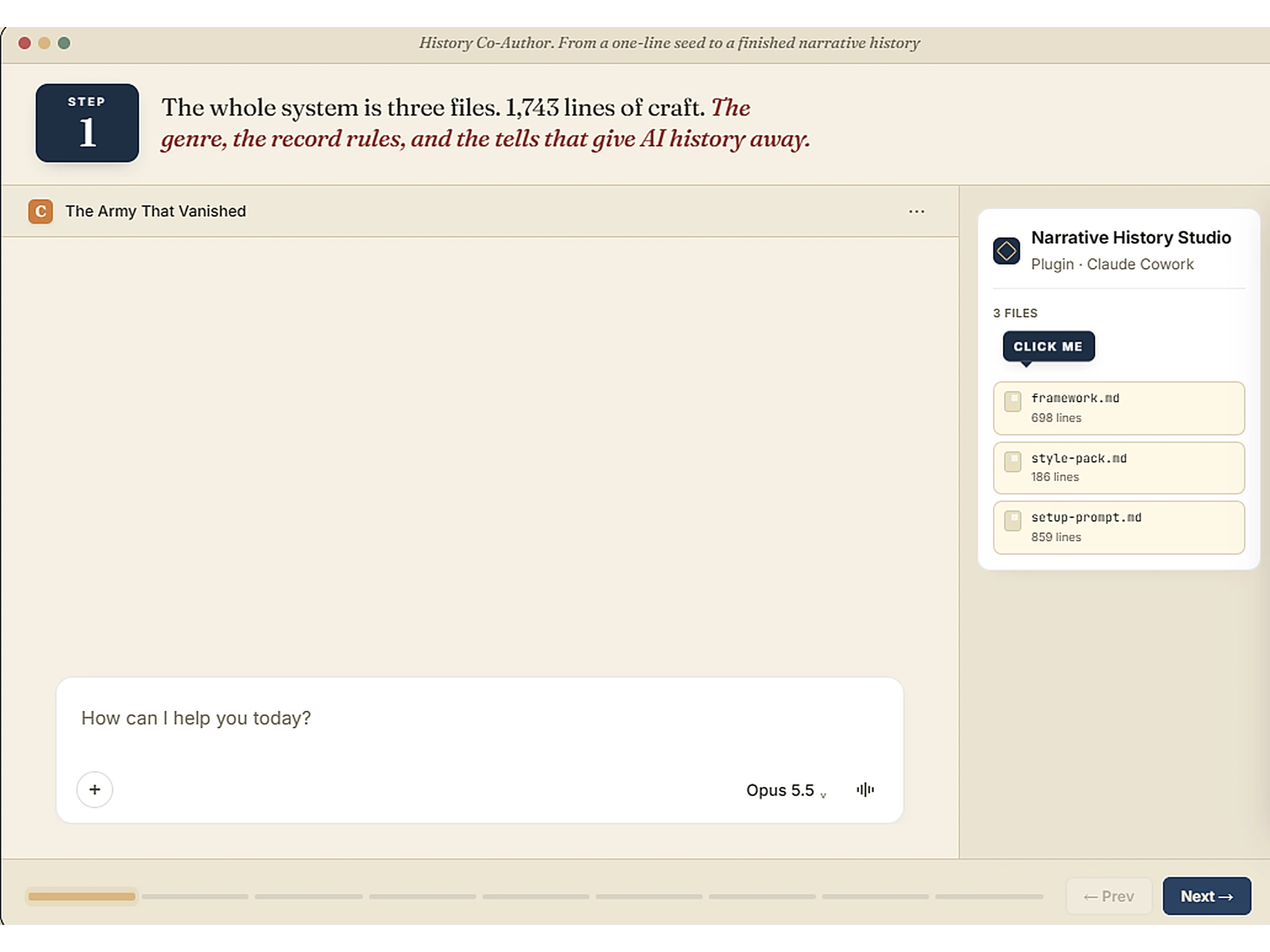
The $17 front-end package includes: Narrative History framework, Training, and Narrative History Studio.
One-time payment transparency: The $17 front-end package includes the Narrative History framework, training, and Narrative History Studio. However, buyers should distinguish between the front-end purchase and optional products later in the funnel.
Orders are completed on the WarriorPlus checkout page over an SSL-encrypted connection.
Refunds for History Co-Author are handled by the vendor and WarriorPlus under their refund policy. If you need help with a refund request, email our support team and we'll point you in the right direction.
"The biggest difference for me was having a process instead of opening ChatGPT and hoping for the best."— Michael, Virginia ★★★★★
"I still review everything carefully, but the workflow made the project feel much more manageable."— Laura, Texas ★★★★★